The ROI of Shared Truckload

Flock customers of all company sizes experience significant savings
with Shared Truckload by paying only for the space they use.
These savings grow year after year as shippers integrate STL
as a core transportation mode. On top of this, as truckload rates
increase, so does the potential for even greater cost efficiency.
About this study
How we analyzed Shared Truckload ROI
This study measures the ROI of Shared Truckload by comparing what shippers paid for STL compared to the cost of moving the same freight in an underutilized truckload, using real shipment data from ramped Flock customers. To make the results useful to your business specifically, we broke them out by company size, so you can see what STL ROI looks like for a company like yours. A full methodology is included at the end of this report.
Shared Truckload (STL) is a freight mode in which multiple shippers’ compatible freight is pooled into a single truck, so each shipper pays only for the linear feet they use while keeping truckload-level service.
How we analyzed Shared Truckload ROI
Look for your profile color throughout this report to match your business’s use case.
ENTERPRISE
$5.7B
Median customer size (annual revenue)

765 mile avg. route distance
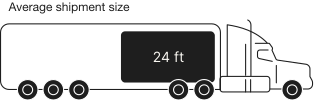
MID-MARKET
$255M
Median customer size (annual revenue)
797 mile avg. route distance
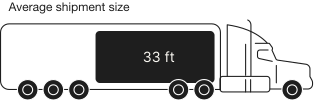
SMALL BUSINESS
$21M
Median customer size (annual revenue)
971 mile avg. route distance
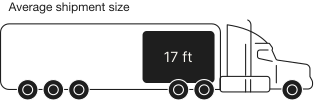
The problem
In 2024, shippers reported 58% of truckloads moved partially empty — the equivalent of one in three trucks running completely empty, leaving an average of 34 linear feet of deck space unused. In practice, that means most businesses in the U.S. are paying to ship air. When we looked at historical shipment pricing comparisons, we found the same pattern: freight that was too big for LTL but too small to fill a truckload moved in an underutilized truckload.
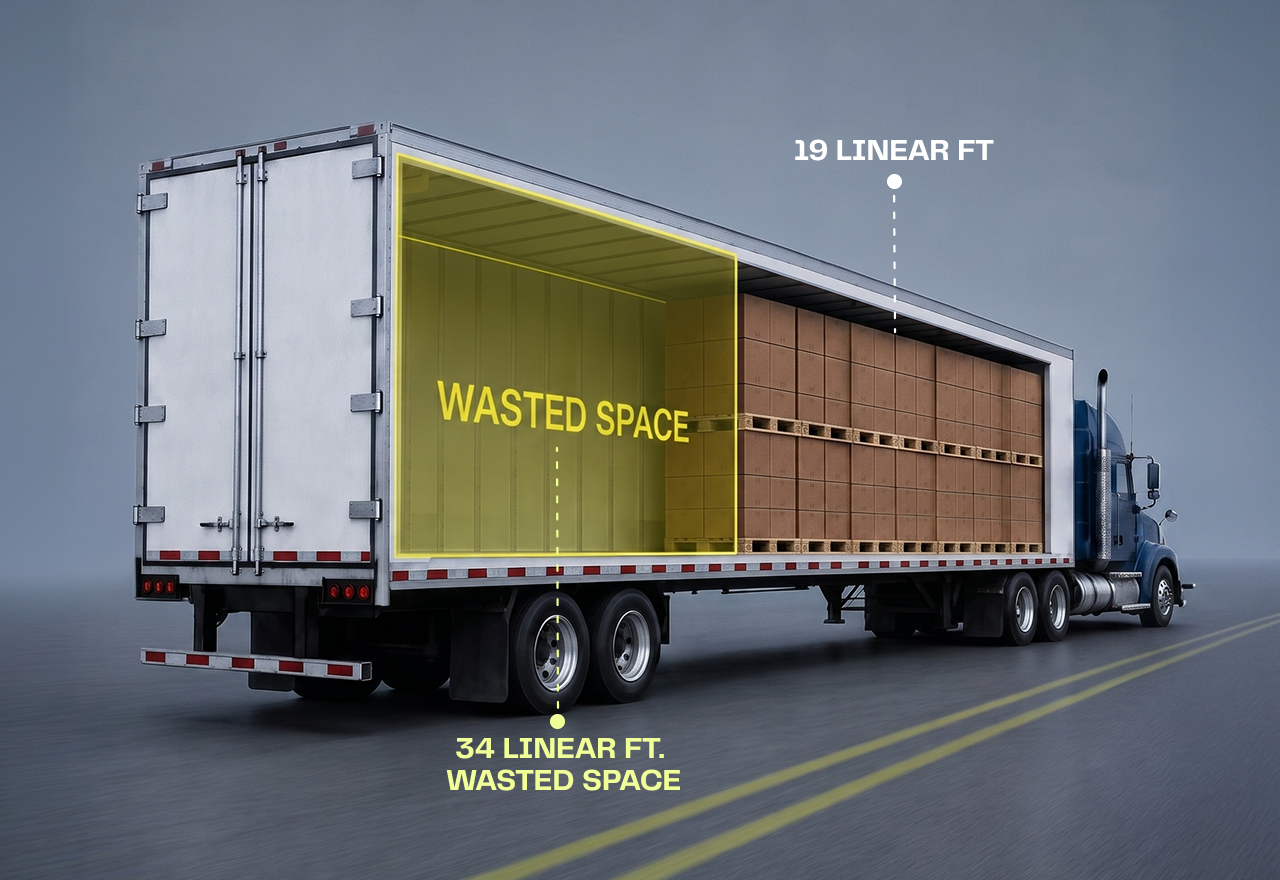
of truckloads moved partially empty in 2024 — the equivalent of 1 in 3 trucks moving completely empty.
Shared Truckload customers turn air into savings
Flock’s Shared Truckload customers save an average of 23% annually compared to standard truckload because they only pay for the space they use. Savings scale with freight spend and shipment volume. Savings also vary based on shipment size, route, requirements, and other attributes.
STL savings by customer profile
Real shipment example
Two Flock customers were both independently moving freight from Los Angeles to Dallas. On their own, each would have booked a dedicated truck, sending half-empty trailers down the highway and paying full truckload rates for wasted space.
Instead, Flock combined their shipments into a single Shared Truckload, so both still received truckload-level service while only paying for the space they used.
- Shipper A moved 32 linear feet of traffic cones, dropping their cost by $824 or 28% compared to an underutilized TL
- Shipper B moved 16 linear feet of electronics, dropping their cost by $2,925 or 46% compared to an underutilized TL
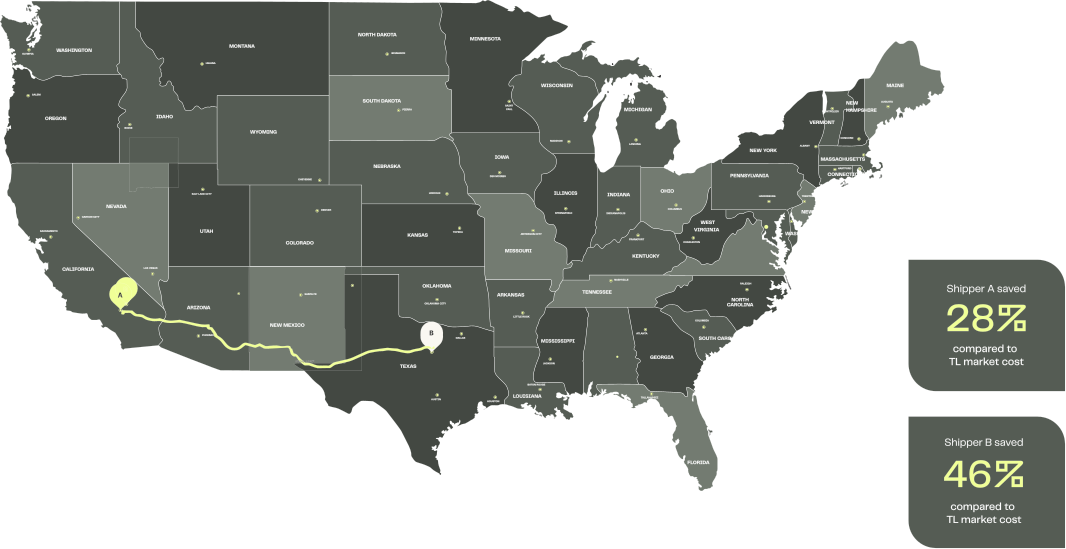
Now imagine scaling that kind of efficiency with 1,000 similar shipments, Shipper A would save about $824,000, while Shipper B would unlock roughly $2,925,000 in savings, both without sacrificing truckload-level service or control. These are realistic outcomes for a scaled Flock customer.
The value of STL grows over time
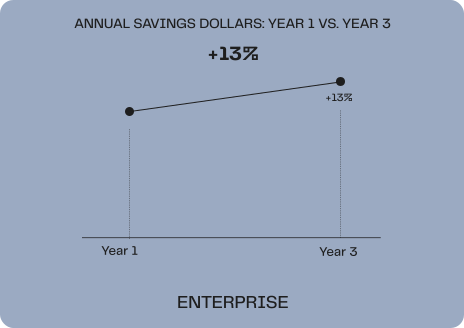
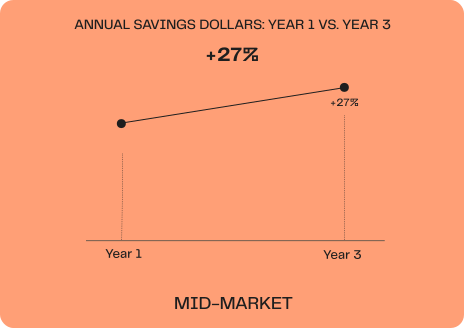
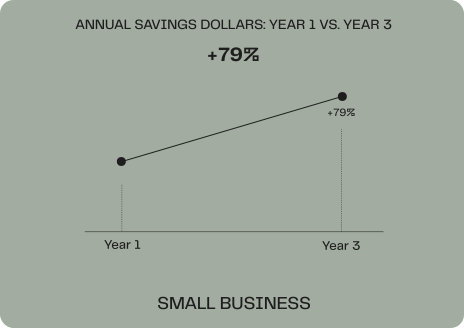
As customers move more shipments via STL, their total savings dollars increase over time. The underlying savings rate does not necessarily change; the increase reflects higher adoption, greater shipment volume, and market conditions.
In the charts below we show the relative year over year savings by customer profile. Savings are relative to spend, which is why small businesses show a larger growth percentage.
Savings grow over time because the most successful Shared Truckload customers do more than test STL on a few loads. They integrate it into their transportation strategy, expand it across recurring lanes, and work with Flock to identify where it fits best.
In 2026, budgets are tight and every dollar counts.
Truckload rates are up 47% year over year as of July 2026, and budgets are constrained. The same half-empty truck now costs significantly more to move, which means the savings opportunity from switching to Shared Truckload is larger than ever. When rates rise, the cost of shipping air rises with them, and so do STL savings.
Shared Truckload value increases even more during inflationary cycles.
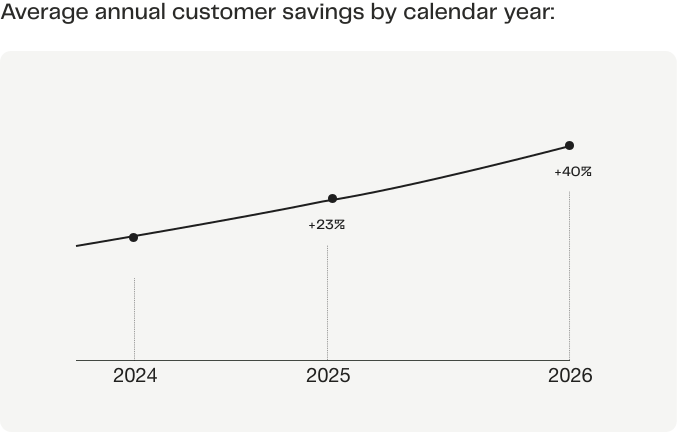
How savings increased from 2025 to 2026:
The takeaway
Integrating STL as a core freight mode unlocks greater, more durable cost savings.
Shared Truckload delivers measurable ROI across all four company sizes studied, from large enterprises to super small businesses. It delivers the strongest ROI when adopted as a core mode within a broader transportation strategy, with lane-level optimization and ongoing partnership helping unlock more savings over time.


Shared Truckload delivers the strongest ROI for shippers with mid-sized freight (roughly 10–40 linear feet) on recurring lanes who want truckload-level service without paying for a full trailer.
METHODOLOGY NOTES & LEGAL DISCLAIMER
This study was conducted using Flock’s definition of a “ramped customer” with data spanning from 2020–2026. Reported savings reflect all ramped customers from a given month/year, and all customers meeting that definition were included in the analysis. Savings represent the difference between the cost of shipping via Shared Truckload and the cost of moving the same freight in an underutilized truckload. Figures are drawn from Flock shipment data unless a third-party source is cited. These numbers are for demonstration purposes only and are not a guarantee of actual savings.
FAQs
The average mid-market Shared Truckload customer saves $494 per shipment versus an underutilized truckload. Savings grow as shipment volume increases. For example, if a mid-market shipper moved 500 STL shipments, they would save $247,000.
Shared Truckload customers save an average of about 23% or $536 versus an underutilized truckload. Savings grow as shipment volume increases. For example, if a shipper moved 1,000 loads via STL, they would save $536,000.
Yes. Shared Truckload savings grow over time because customers who integrate STL more deeply into their network move more right-fit freight through the mode, increasing cumulative savings year after year. Over the first three years of the partnership, average savings amount for mid-market customers increases by +27%.
Yes. As truckload rates rose +47% year over year to July 2026, average STL customer savings amount increased +40% in a single year. A more expensive half-empty truck means a larger savings opportunity by switching to Shared Truckload.
All three profiles studied save with STL: Enterprise, Mid-Market, and Small Business. Larger shippers save the most in total dollars, and smaller shippers save the most per shipment.
STL fits best for mid-sized freight (roughly 10–40 linear feet) on recurring lanes when you want truckload-level service without paying for empty trailer space. It's less ideal for freight that already fills a full trailer or is less than 10 feet.


